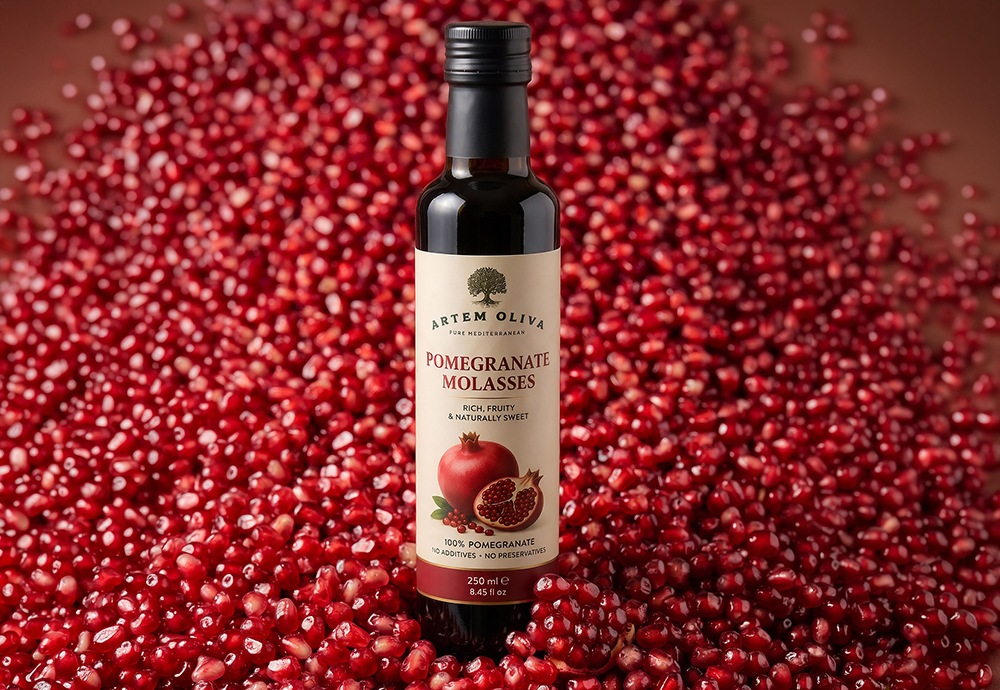
Pomegranate molasses is a thick, dark red syrup made by reducing pomegranate juice until it turns glossy and concentrated. Known in Turkey as nar ekşisi (literally “pomegranate sour”), it tastes tangy first and fruity-sweet second. Cooks use it in dressings, marinades, glazes and dips across Turkish, Levantine and Persian cuisine.
It looks like a sweetener, but it behaves more like a souring agent, closer to lemon juice or tamarind than to honey. In this guide we explain how genuine pomegranate molasses is made, what it tastes like, ten practical ways to use it, the best substitutes, and how to tell the real product from cheap imitations.
What Does Pomegranate Molasses Taste Like?
Genuine pomegranate molasses is sharp, tart and deeply fruity, with a gentle sweetness and a faint bitter edge from the fruit. The acidity hits first; the concentrated pomegranate flavor follows and lingers.
Its texture is thick and pourable, similar to a balsamic glaze. The color ranges from deep ruby to dark garnet. Because the flavor is so concentrated, a teaspoon or two is usually enough to change a whole dish.
If a pomegranate molasses tastes mostly sweet and only mildly sour, check the label. That flat, syrupy profile is the classic sign of a sugar- or glucose-based imitation.
How Is Pomegranate Molasses Made?
Real pomegranate molasses has one ingredient: pomegranate. The method has two versions: the traditional village way and modern industrial production.
The Traditional Method
In southern and southeastern Turkey, families still make nar ekşisi every autumn. Ripe, sour-sweet pomegranates are seeded and pressed, and the juice is simmered for hours in wide pans until it thickens. It takes a large amount of fruit to make a single bottle, which is why genuine pomegranate molasses is never the cheapest bottle on the shelf.
The Modern Method
Commercial producers press fresh fruit, clarify the juice and concentrate it under vacuum at low temperature. Lower heat protects the natural color, aroma and polyphenols that open-pan boiling can damage. The finished molasses is tested for Brix, acidity and pH, then hot-filled into bottles or bulk containers.
Why Turkey Is the Origin to Know
Turkey is one of the world’s largest pomegranate producers, and its Hicaz (Hicaznar) variety is prized for deep color and a natural sweet-tart balance. The fruit is harvested from September to November across the Mediterranean and Aegean regions, and pressing peaks from October to January.
Turkey also protects the name by law. Since 2023, the Turkish Food Codex allows only pomegranate, pomegranate juice, pomegranate juice concentrate and water in a product sold as pomegranate molasses. That is why many European and North American retailers source from a pomegranate molasses exporter in Turkey and print “made from Turkish pomegranates” on the label.
Pomegranate Molasses vs Grenadine vs Balsamic Glaze
These three syrups look alike but behave very differently in the kitchen.
| Pomegranate molasses | Grenadine | Balsamic glaze | |
|---|---|---|---|
| Main ingredient | Pomegranate juice, concentrated | Usually sugar syrup and flavorings | Reduced balsamic vinegar, often with sugar |
| Taste | Tart first, then fruity-sweet | Very sweet, mild fruit | Sweet-sour, wine-like |
| Typical use | Dressings, marinades, glazes, dips | Cocktails and soft drinks | Finishing drizzle for salads, cheese |
| Works as a souring agent | Yes | No | Partly |
In short: grenadine is a sweetener, balsamic glaze is a finishing sauce, and pomegranate molasses is a cooking acid with real fruit depth.
10 Ways to Use Pomegranate Molasses
- Salad dressing. Whisk one part pomegranate molasses with three parts extra virgin olive oil, a pinch of salt and a little garlic. It is the classic dressing for fattoush and Turkish çoban salatası.
- Kısır. Stir it into this Turkish bulgur salad with tomato paste, herbs and lemon for its signature tang.
- Muhammara. Blend roasted red peppers, walnuts, breadcrumbs and pomegranate molasses into the famous Aleppo-style dip.
- Meat marinade. Combine it with olive oil, garlic, cumin and pepper flakes for lamb, chicken or beef. The acidity tenderizes and the sugars caramelize on the grill.
- Roasted vegetable glaze. Toss carrots, eggplant, Brussels sprouts or squash with a spoonful in the last ten minutes of roasting.
- Fish and seafood. Brush it lightly over salmon or prawns before grilling.
- Stews and soups. Add a teaspoon at the end to lift lentil soup, bean stews or tomato sauces, the way you would a squeeze of lemon.
- Drinks. Mix a small amount into sparkling water or iced tea, or use it in cocktails where you want tartness rather than sweetness.
- Yogurt and desserts. Drizzle it over thick yogurt, vanilla ice cream or fresh fruit.
- Cheese boards. Serve it in a small bowl next to white cheese, halloumi or aged cheddar.
Start small. Its concentrated flavor can dominate a dish, so add a teaspoon, taste, then adjust.
What Can I Substitute for Pomegranate Molasses?
No substitute matches it exactly, but these get close:
- Homemade reduction. Simmer unsweetened pomegranate juice with a squeeze of lemon until it reduces to roughly a quarter of its volume and coats a spoon. This is the closest option.
- Balsamic glaze plus lemon. Good for dressings and drizzles; slightly sweeter and more vinegary.
- Tamarind paste. Similar sourness and depth; thin it with a little water or honey.
- Lemon juice plus honey or date syrup. A quick fix for marinades and salads, though it lacks the fruit depth.
- Cranberry juice reduction. Similar tartness and color, with a different fruit note.
Real vs Imitation: Read the Ingredient List
The biggest problem in this category is imitation “pomegranate sauce” sold as pomegranate molasses. These products are mostly glucose-fructose syrup, sugar, citric acid and coloring, with only a small share of pomegranate.
To check what you are buying:
- Ingredients. The label should list only pomegranate juice or pomegranate juice concentrate. Anything else (sugar, glucose syrup, citric acid, colorants) means it is not genuine nar ekşisi.
- Taste. Genuine molasses is clearly sour. A mostly sweet product is usually syrup-based.
- Price. Real pomegranate molasses needs a lot of fruit. A bottle far cheaper than others on the shelf is a warning sign.
- Origin rules. Under the Turkish Food Codex, imitation sauces can no longer be sold as nar ekşisi in Turkey.
If you buy for a store, restaurant group or private label range, see our full buyer’s checklist for evaluating any supplier, including CoA and adulteration testing.
How to Store Pomegranate Molasses
Unopened, genuine pomegranate molasses keeps for up to two years in a cool, dry cupboard away from direct sunlight. Its high natural sugar and acid content make it very stable.
After opening, close the cap tightly and keep it in the refrigerator for the best flavor. It may thicken in the cold; let it sit at room temperature for a few minutes before pouring. Crystals can form over time; that is natural sugar, not spoilage. Discard it only if you see mold or notice a fermented smell.
Frequently Asked Questions
Is pomegranate molasses the same as pomegranate syrup?
Not always. Genuine pomegranate molasses is 100% concentrated pomegranate juice and tastes clearly sour. Many products sold as “pomegranate syrup” or “pomegranate sauce” contain added sugar or glucose syrup and taste much sweeter.
Does pomegranate molasses contain sugar?
Genuine pomegranate molasses contains only the natural sugars of the fruit, with no added sugar. Always check the ingredient list: it should show pomegranate juice or concentrate only.
Is pomegranate molasses vegan and gluten-free?
Yes. Pure pomegranate molasses is made only from fruit, so it is vegan, vegetarian and naturally gluten-free.
Does pomegranate molasses go bad?
It is very shelf-stable. Unopened, it keeps for up to two years in a cool, dark place. Once opened, refrigerate it and use it within several months for the best flavor.
What is nar ekşisi?
Nar ekşisi is the Turkish name for pomegranate molasses. It means “pomegranate sour”, which describes its role in Turkish cooking as a souring agent rather than a sweetener.
Where does the best pomegranate molasses come from?
Turkey is a leading origin thanks to the Hicaz pomegranate variety and strict food rules that only allow 100% pomegranate products to be sold as nar ekşisi. Lebanon, Syria and Iran also have long traditions of making it.
Bring Authentic Nar Ekşisi to Your Shelves
Genuine pomegranate molasses is one ingredient, a lot of fruit and a flavor no syrup can copy. Once you have cooked with the real thing, the difference is obvious, and so is the reason chefs and shoppers ask for it by origin.
Artem Oliva supplies importers, retailers and food manufacturers with bulk and private label pomegranate molasses made from 100% Turkish pomegranates, alongside our olive oils in mixed containers. For more ideas in the kitchen, explore our Mediterranean recipes, or contact our export team at sales@artemoliva.com for specifications and samples.